
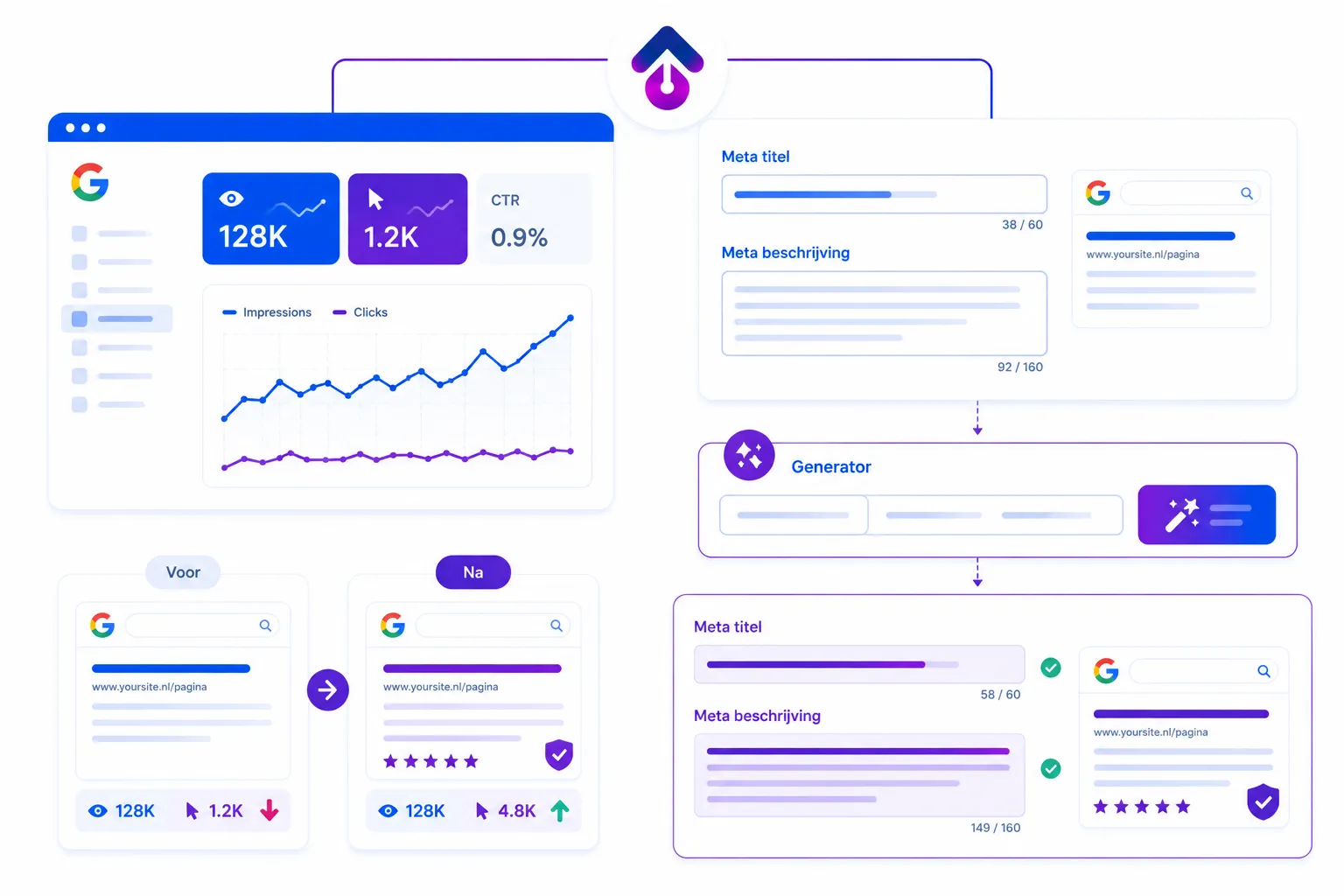
An SEO meta tags generator helps you improve title tags and meta descriptions so pages with impressions can earn more clicks. If Google already shows your page but users do not click, clearer snippets can improve click through rate without creating new content from scratch.
Why do impressions not always turn into clicks?
Impressions mean your page appears in search results. Clicks mean users choose your result. A page can get many impressions but few clicks when it ranks too low, when the title is unclear or when the meta description does not match the search intent.
This is common for growing websites. Google starts testing pages across more keywords and impressions rise before clicks follow. That is not necessarily a bad sign. It means there may be existing visibility that can be improved.
Before writing more new content, it is smart to look at pages with impressions and low click through rate. Those pages already have a connection with search demand.
What are SEO meta tags?
SEO meta tags are pieces of information that help search engines and users understand a page. The two most important ones for click through rate are the title tag and the meta description.
The title tag is often used as the clickable headline in search results. The meta description can appear as the short text underneath it. Google can rewrite snippets but strong metadata still helps you communicate the page clearly.
A good title and description should match the query, show the value of the page and make the result feel trustworthy without using clickbait.
How does a meta tags generator help?
A meta tags generator helps you create title and description ideas based on a page topic, keyword or search intent. This is useful when you need to improve many pages and do not want to write every snippet from scratch.
The best use is not blind automation. You should still review the output and make sure it fits the page. A generator gives you a strong starting point but human judgement is needed to choose the version that best matches the search result.
You can try the free SEO tools from SEOptimate when you want to improve meta tags for important pages.
What makes a good title tag?
A good title tag is clear, specific and close to the search intent. It should include the main topic and give the user a reason to click. Avoid vague titles that could apply to any page.
For example, a title like “SEO tips” is too broad. A title like “SEO meta tags generator: improve titles and descriptions” is clearer because it tells the user exactly what the page is about.
For webshops, product and category titles should include the product type, important attributes and sometimes the brand or use case. The goal is to make the result relevant at a glance.
What makes a good meta description?
A good meta description explains what the user will find on the page and why it is useful. It should not repeat the title word for word. It should add context.
Descriptions work best when they reflect the user's problem or question. If the page is about improving CTR, mention impressions, clicks and search results. If the page is a product category, mention the product range, use case or buying support.
Do not overpromise. A description should create confidence, not hype. Search users are quick to ignore snippets that feel generic or exaggerated.
How should you prioritize pages for metadata improvements?
Start with pages that already get impressions but have a low click through rate. These pages are already visible and may improve faster than pages that have no search visibility at all.
Then look at average position. A page in position 5 to 20 with low CTR is often a good candidate. If a page ranks around position 50, metadata alone will probably not be enough. That page may need better content, internal links or technical improvements.
SEOptimate helps you find these opportunities and improve them without depending on an expensive SEO agency. You can use search data, audits and content insights to work on the pages that matter most.
Want to find out which pages can get more clicks from existing impressions? Book a free demo at seoptimate.com/demo
An SEO meta tags generator helps create title tags and meta descriptions for pages based on a topic, keyword or search intent.
Yes. Clearer title tags and meta descriptions can help more users choose your result when your page already appears in search results.
No. Google can rewrite snippets based on the query but writing a strong meta description still helps clarify the page.
Start with pages that get impressions but have low click through rate, especially when they rank around position 5 to 20.
SEOptimate helps identify pages with CTR opportunities and supports better metadata, audits and SEO execution.

About the author
Koen Pijnenburg
Founder & CEO, SEOptimate
Koen Pijnenburg is the founder and CEO of SEOptimate. As an entrepreneur with years of experience in e-commerce and online marketing, he helps businesses grow their organic traffic through AI-powered content automation.
LinkedIn →